


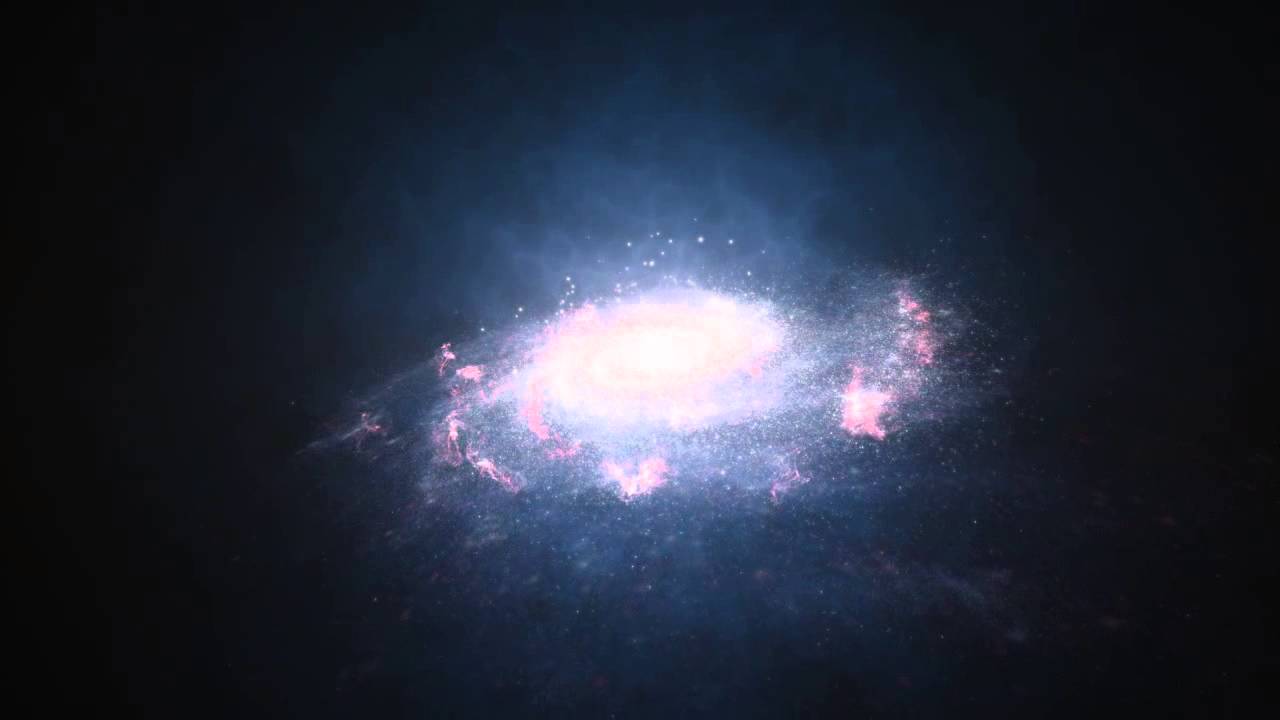
 Article Here: http://www.quantumday.com/2013/04/sta... A galaxy that is experiencing a very high rate of stars being formed within it is known as a starburst galaxy. Within a starburst galaxy, the rate of star formation is so high that the galaxy consumes all of its gas. They are known as starbursts because of the frantic episodes of activity when stars are formed. This animation shows the method used to probe the gas around distant galaxies. Astronomers can use tools such as Hubble's Cosmic Origins Spectrograph (COS) to probe faint galactic envelopes by exploiting even more distant objects — quasars, the intensely luminous centres of distant galaxies powered by huge black holes. As the light from the distant quasar passes through the galaxy's halo, the gas absorbs certain frequencies -- making it possible to study the region around the galaxy in detail. This new research utilised Hubble's COS to peer through the very thin outskirts of galactic halos, much further out than shown in this representation, to explore galactic gas at distances of up to twenty times greater than the visible size of the galaxy itself. Credit: ESA, NASA, L. Calçada Image/Video Use Policy: http://www.spacetelescope.org/copyright/
Hubble's Cosmic Origins Spectrograph (COS) Probes Gas in Distant Galaxies - YouTube | |
| 1 Likes | 1 Dislikes |
| 448 views views | 355 followers |
| Science & Technology | Upload TimePublished on 25 Apr 2013 |

